Now Reading: Brooklyn Dodgers
-
01
Brooklyn Dodgers



Hey everyone, welcome back to *Brooklyn Echoes*, the podcast that keeps the borough’s legends and memories alive. I’m your host, Robert Henriksen.
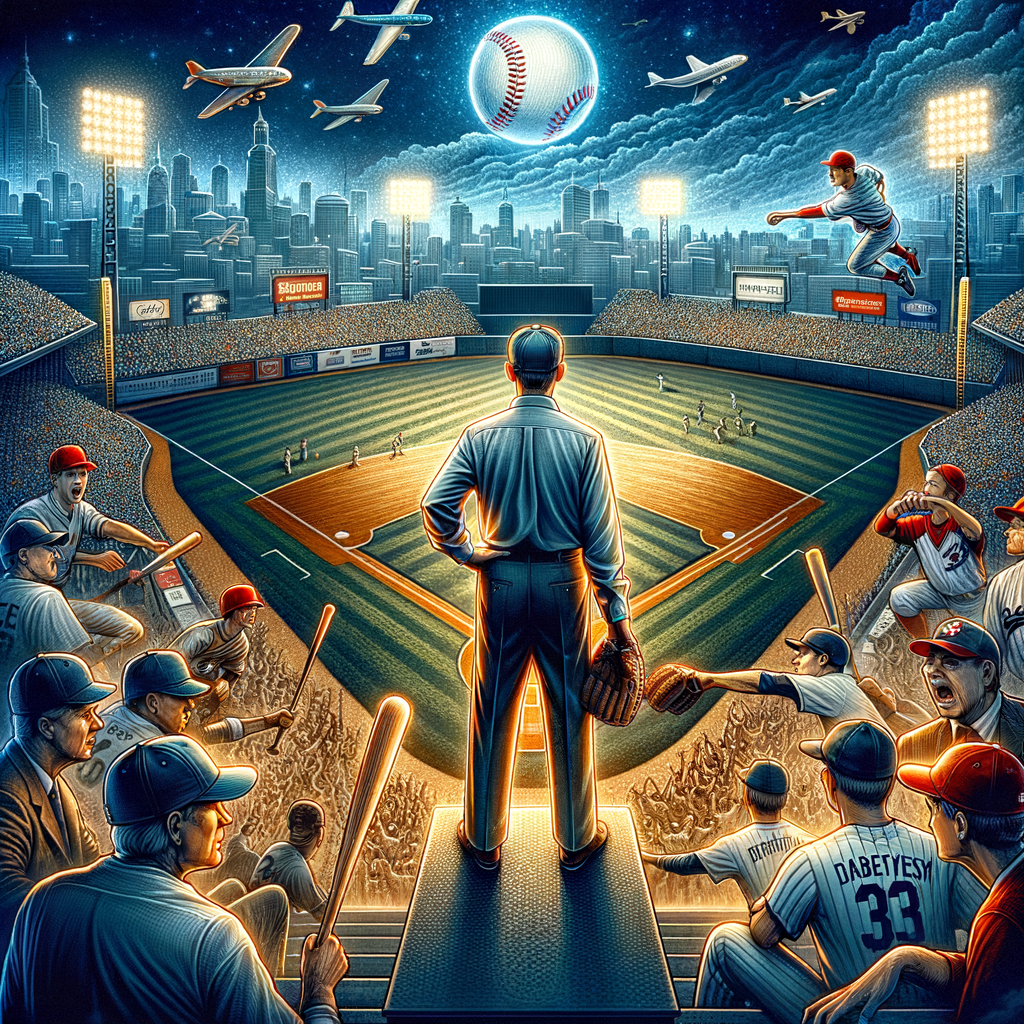
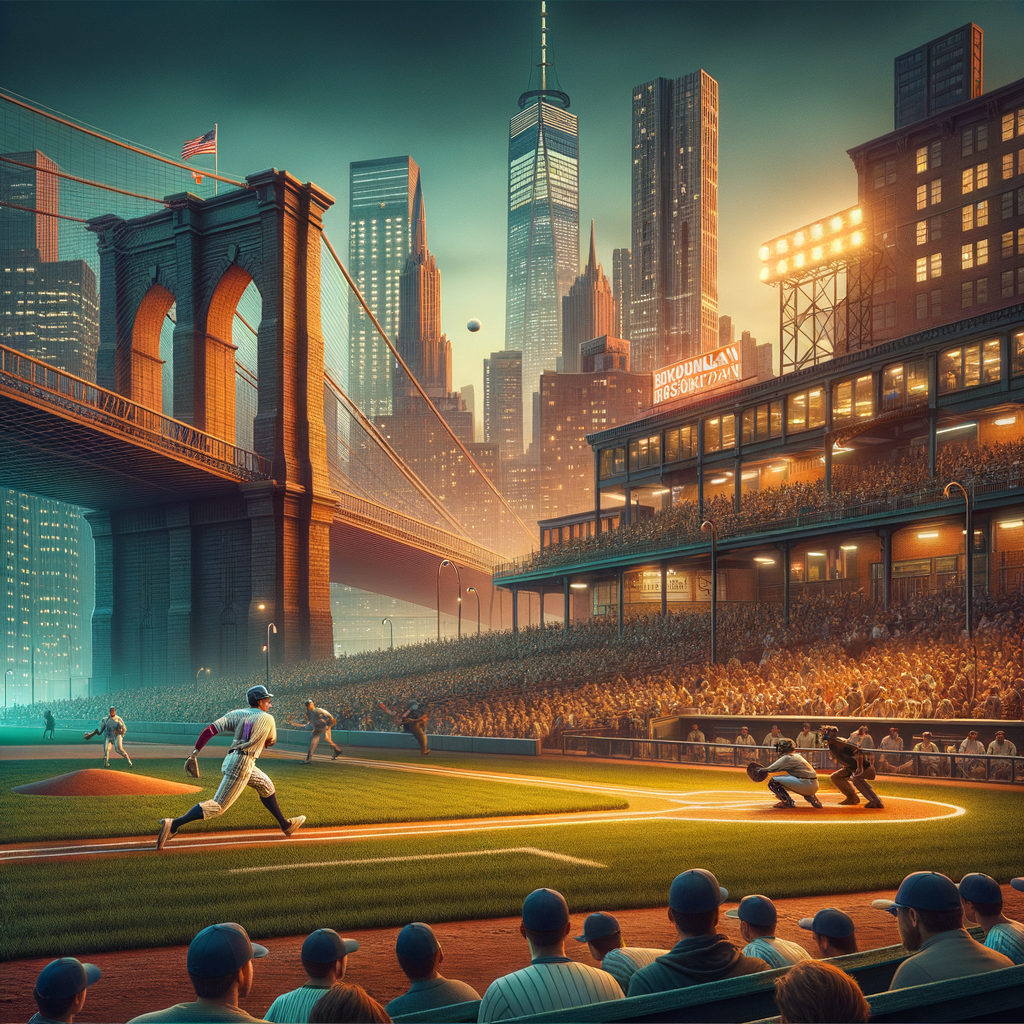
In the heart of mid-20th-century Brooklyn, where the rattle of trolleys mixed with the cheers of crowds and the aroma of knishes from street vendors, stood a cathedral of baseball: Ebbets Field, home to the beloved Brooklyn Dodgers. This isn’t just a tale of bats and balls; it’s a story of community, triumph, heartbreak, and the inexorable pull of change that reshaped American sports. Picture Brooklyn in the 1910s and beyond—a borough bursting with immigrants, factories, and fierce neighborhood pride. The Dodgers, originally known as the Brooklyn Trolley Dodgers for the perilous streetcars fans dodged to reach games, embodied that spirit. Founded in 1883 as part of the American Association, they joined the National League in 1890, cycling through nicknames like the Bridegrooms, Superbas, and Robins before settling on Dodgers in the 1930s. But it was Ebbets Field that truly anchored them to the soul of Brooklyn.
Opened on April 9, 1913, Ebbets Field was the brainchild of team owner Charles Ebbets, who rose from a humble ticket seller to president. Frustrated with the aging Washington Park, Ebbets secretly bought up parcels of land in Flatbush, a rundown area called Pigtown for its garbage dumps and roaming swine. For $750,000—a fortune then—he built a intimate ballpark with a capacity of about 18,000 initially, expanding to 32,000 by the 1930s. Its design was revolutionary: a double-decked grandstand hugging the diamond, with the right-field wall just 301 feet from home plate, topped by a quirky screen to prevent cheap homers. The entrance featured a marble rotunda with chandeliers and a tile floor emblazoned “Ebbets Field,” welcoming fans like royalty. No massive parking lots—fans arrived by subway or foot, spilling out onto Sullivan Place and McKeever Place in a sea of blue caps and banners. The field was quirky too: sloping outfield, asymmetrical dimensions, and that famous right-field scoreboard where ads for Schaefer Beer and Abe Stark’s clothing store promised “Hit Sign, Win Suit.” It was baseball’s bandbox, where the crack of the bat echoed off nearby apartment buildings, and residents watched games from rooftops for free.
The glory days at Ebbets unfolded like a classic underdog saga. Under managers like Wilbert Robinson and Leo Durocher, the Dodgers became perennial contenders, but oh, those heartbreaking losses to the Yankees in the Subway Series. Then came 1947: Branch Rickey, the innovative general manager, signed Jackie Robinson, shattering baseball’s color barrier. Robinson’s debut at Ebbets on April 15 drew 26,623 fans, many African American, in a moment that transcended sport. The Dodgers integrated further with stars like Roy Campanella, Don Newcombe, and Duke Snider. The pinnacle? 1955, when the “Boys of Summer” finally toppled the Yankees in the World Series. Johnny Podres’ shutout in Game 7 sparked riots of joy—cars overturned, bonfires lit, Brooklyn united in ecstasy. Ebbets pulsed with life: Hilda Chester’s cowbell clanging from the bleachers, the Sym-Phony Band’s off-key tunes mocking umpires, and Gladys Goodding’s organ serenades. Attendance soared, averaging over a million fans a year in the 1940s and ’50s, but the stadium’s age showed—cramped seats, poor sightlines, and restrooms that reeked.
Yet, beneath the cheers, trouble brewed. By the mid-1950s, Brooklyn was changing. White flight to suburbs drained the fan base; cars became king, but Ebbets had only 700 parking spots, leading to gridlock on game days. The stadium, now over 40 years old, needed repairs: tattered screens, leaking roofs, and structural woes. Enter Walter O’Malley, the shrewd lawyer who took majority ownership in 1950. O’Malley envisioned a modern domed stadium at Atlantic and Flatbush Avenues, where the Barclays Center stands today—a privately funded marvel with ample parking. But NYC power broker Robert Moses, the parks commissioner with iron control over urban planning, balked. Moses pushed for a site in Queens’ Flushing Meadows, site of the future Shea Stadium, arguing Brooklyn’s location was outdated. O’Malley saw it as an exile from the borough’s heart; negotiations soured into public feuds. “Moses wanted to control everything,” critics said, while O’Malley was painted as greedy. Meanwhile, Los Angeles dangled a sweeter deal: 300 acres in Chavez Ravine, public funding for infrastructure, and a booming West Coast market hungry for big-league ball.
The tipping point came in 1957. With the New York Giants also eyeing a move to San Francisco, National League owners voted on May 28 to approve both relocations, provided they went together—expanding baseball’s footprint. O’Malley, facing stalled talks and Ebbets’ decay, pulled the trigger. The Dodgers’ final game at Ebbets was September 24, 1957—a 2-0 win over the Pirates before a sparse 6,702 fans, many in tears. “Dem Bums” were gone, heading to LA for the 1958 season, where they’d play in the Coliseum before Dodger Stadium opened in 1962. Brooklyn felt betrayed; editorials decried “the rape of Brooklyn,” fans mourned like a death in the family. Ebbets stood empty, a ghost of its former self, until demolition began on February 23, 1960. The same wrecking ball from the Polo Grounds’ teardown, painted like a baseball, smashed into the stands amid protests and nostalgia. Bricks were salvaged as souvenirs; the site became the Ebbets Field Apartments, affordable housing that nods to history with a plaque.
Why did they leave? Blame is shared: O’Malley’s ambition for profit and modernity, Moses’ intransigence, the city’s failure to keep its team, and broader shifts like TV’s rise and population moves west. For Brooklyn, the loss stung deep— no major league team until the Nets arrived decades later. Yet, the Dodgers’ legacy endures: in Dodger blue still worn proudly, in tales of Robinson’s courage, and in the what-ifs of a borough forever changed. Ebbets Field may be gone, but in the echoes of “Wait ’til next year!” it lives on, a reminder that sometimes, even in America’s pastime, progress comes at a heartbreaking cost.
If you like this podcast, Check out our new Brooklyn Echo’s Audio podcast at The Brooklyn Hall of Fame were we have been recording episodes to stream at your favorite streaming services like Apple or Spotify.

Related Posts

Stay Informed With the Latest & Most Important News
Previous Post
Next Post






Advertisement


-
 01A Journey Through the Life of Gene Tierney
 -
 02The Inspiring Journey of William DeMeo
 -
 03A Journey Through the Life of Bea Arthur: Comedian & Actress
 -
 04A Deep Dive into Debra Messing’s Life and Career
 -
 05Exploring the Life of Edith “Didi” Conn: A Journey through History
 -
 06A Comprehensive Look at Edie Falco’s Inspiring Journey
 -
 07Jimmy Smits: A Look at His Life and Career