


Now Reading: Brooklyn, 1 of the five boroughs of New York City
-
01
Brooklyn, 1 of the five boroughs of New York City



Hey everyone, welcome back to *Brooklyn Echoes*, the podcast that keeps the borough’s legends and memories alive. I’m your host, Robert Henriksen.
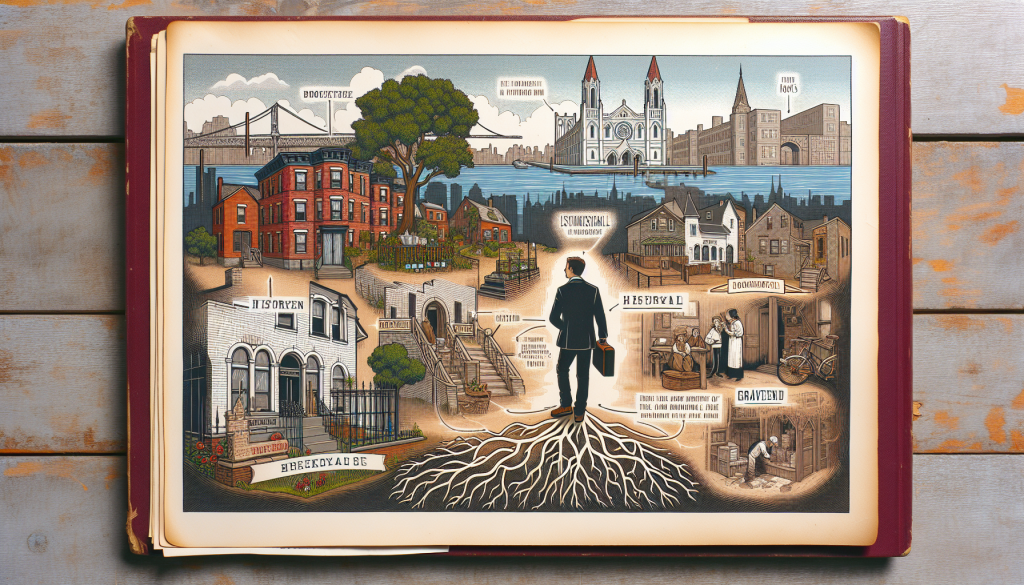
Brooklyn, one of the five boroughs of New York City, was originally composed of six separate towns settled primarily by the Dutch in the 17th century. These towns were eventually consolidated into the City of Brooklyn in the 19th century before it became a borough in 1898. Here’s a breakdown of the original six towns:
– **Brooklyn (Breuckelen)**: The namesake town, founded around 1646, centered in what is now Brooklyn Heights and nearby areas.
– **Bushwick (Boswijck)**: Established in 1661, located in the northern part of modern Brooklyn.
– **Flatbush (Midwout or Vlacke Bos)**: Founded in 1652, in central Brooklyn.
– **Flatlands (New Amersfoort)**: Settled in 1636, in the southern area.
– **New Utrecht**: Established in 1657, in the southwestern part, named after Utrecht in the Netherlands.
– **Gravesend**: Founded in 1643 by English settlers under a Dutch patent (making it the only non-Dutch-founded town among the six), located in the south.
Brooklyn originally consisted of six Dutch-founded towns in Kings County, as previously discussed. Over the 19th century, additional towns were created through divisions of these original areas, and the City of Brooklyn (incorporated in 1834 from the original Town of Brooklyn) expanded by annexing them one by one. This process was driven by rapid population growth, industrialization, improved transportation (like ferries and later bridges to Manhattan), and the need for unified governance and infrastructure. By 1896, Brooklyn had reached its full extent within Kings County. Here’s a timeline of how more towns were added via creation and annexation:
### Creation of Additional Towns
– **Williamsburgh**: Originally part of Bushwick, it was incorporated as a village in 1827 and became a separate town in 1840 (later briefly a city in 1852).
– **New Lots**: Formed in 1852 from the eastern portion of Flatbush.
These splits reflected growing settlements and administrative needs in rural areas turning urban.
### Annexations to the City of Brooklyn
– **1854–1855**: Bushwick and Williamsburgh were annexed, forming the “Eastern District” of Brooklyn. This doubled the city’s size and integrated industrial and residential areas (the city’s name was simplified from “Brooklyn” to drop the ‘h’ in Williamsburgh).
– **1867**: Greenpoint (a section of Bushwick) was fully integrated, though often grouped with the 1850s annexations.
– **1886**: New Lots was annexed, expanding Brooklyn eastward.
– **1894**: Flatbush, Gravesend, and New Utrecht were annexed, bringing in more southern and southwestern areas.
– **1896**: Flatlands was the final annexation, completing Brooklyn’s control over all of Kings County.
### Transition to Neighborhoods
On January 1, 1898, the City of Brooklyn consolidated with New York City (Manhattan and the Bronx), Queens, and Staten Island to form Greater New York City under a new charter. This “Great Mistake” (as some Brooklynites called it, fearing loss of independence and higher taxes) abolished Brooklyn’s separate city government and transformed Kings County into the Borough of Brooklyn. The former towns lost their independent administrative status and were reorganized into unified urban districts under centralized New York City governance.
This shift to neighborhoods occurred gradually through:
– **Urbanization and Subdivision**: As population boomed (Brooklyn was the third-largest U.S. city before 1898), rural town lands were subdivided into residential blocks, streets, and parks. Infrastructure like subways (starting in the early 1900s), roads, and utilities connected them seamlessly.
– **Community and Ethnic Enclaves**: Immigration waves shaped identities—e.g., Bushwick became a hub for Puerto Rican and Dominican communities, Flatbush for Caribbean groups, and Williamsburg for Jewish and later hipster scenes—turning former towns into culturally distinct areas.
– **Administrative Reorganization**: By the 20th century, Brooklyn was divided into community districts (now 18 total) for local planning, preserving loose boundaries from the old towns while integrating them into the borough’s fabric. Historical names like Flatbush or Gravesend persist as neighborhood labels today.
This evolution made Brooklyn a mosaic of over 70 neighborhoods, each with roots in those early towns but fully part of New York City’s dense, interconnected urban landscape.
### Neighborhoods Derived from Original Towns
Brooklyn’s modern neighborhoods largely evolved from the six original Dutch towns settled in the 17th century. The “formation” of these neighborhoods often refers to when areas were developed, named, or recognized as distinct communities, which happened gradually through the 19th and early 20th centuries due to urbanization, subdivision of farmland, and immigration. Exact dates are rare and approximate, based on historical records like land purchases, renamings, or major development periods. Where specific dates aren’t available, I’ve noted periods or median building years (from historical mapping data) as proxies for when the area urbanized into a residential neighborhood.
I’ve grouped them by the original town they derive from, excluding the original town names themselves unless they directly evolved into a modern neighborhood with a noted formation. Data is compiled from historical sources on Brooklyn’s development.
#### From Brooklyn (Breuckelen, settled ~1646, incorporated as city 1834)
– **Bedford–Stuyvesant**: Formed mid-19th century (merger of Bedford and Stuyvesant Heights); median buildings 1920.
– **Boerum Hill**: Developed from 1649 settlement; named revived 1990s, but area urbanized mid-19th century.
– **Brooklyn Heights**: Developed as suburb early 1830s; median buildings ~1890s.
– **Brownsville**: Formed mid-19th century (~1850s) by subdivision.
– **Carroll Gardens**: Popularized mid-20th century; area developed mid-19th century.
– **Clinton Hill**: Developed mid-19th century; median buildings ~1890s.
– **Cobble Hill**: Named mid-19th century; used as site in 1776 Revolutionary War.
– **Crown Heights**: Named 1916 with street laying; area developed late 19th century.
– **Downtown Brooklyn**: Became business hub early 19th century (post-1800s ferries).
– **DUMBO**: Coined 1970s; industrial area developed mid-19th century.
– **Fort Greene**: Developed mid-19th century; site of 1776 fort.
– **Gowanus**: Developed mid-19th century around canal (dug 1860s).
– **Ocean Hill**: Median buildings 1911.
– **Park Slope**: Developed late 19th century; median buildings 1920.
– **Prospect Heights**: Developed late 19th century alongside Prospect Park (opened 1867).
– **Sunset Park**: Developed late 19th century; median buildings ~1900s.
– **Vinegar Hill**: Developed early 19th century; median buildings ~1890s.
– **Weeksville**: Founded 1838 as free Black community.
#### From Bushwick (Boswijck, settled 1661, annexed 1854)
– **East New York**: Developed 1835; incorporated into Brooklyn 1886 (as part of New Lots, but area from Bushwick/Flatbush split).
– **East Williamsburg**: Developed late 19th century; median buildings ~1910s.
– **Greenpoint**: Developed mid-19th century; median buildings ~1900s.
– **South Williamsburg**: Developed early 19th century.
– **Southside**: Developed mid-19th century.
– **Williamsburg**: Formed 1802 (named); separated as town 1840, annexed 1854.
– **Wyckoff Heights**: Developed late 19th century.
#### From Flatbush (Midwout/Vlacke Bos, settled 1652, annexed 1894)
– **Beverley Squares**: Developed early 20th century.
– **Ditmas Park**: Developed early 20th century (1900s-1910s).
– **Farragut**: Developed late 19th century.
– **Fiske Terrace**: Developed early 20th century.
– **Kensington**: Developed late 19th century.
– **Lefferts Gardens**: Formed 1893 by subdivision.
– **Midwood**: Developed late 19th century.
– **Ocean Parkway**: Developed late 19th century (parkway built 1870s).
– **Parkville**: Developed early 20th century.
– **Pigtown (Wingate)**: Developed mid-19th century.
– **Prospect Lefferts Gardens**: Developed 1890s-1910s.
– **Prospect Park South**: Developed early 20th century (1899-1910).
#### From Flatlands (New Amersfoort, settled 1636, annexed 1896)
– **Bergen Beach**: Settled 1633; developed late 19th century.
– **Canarsie**: Developed mid-19th century.
– **Georgetown**: Developed early 20th century.
– **Homecrest**: Developed early 20th century.
– **Marine Park**: Developed 1920s-1930s.
– **Mill Basin**: Developed mid-20th century (post-WWII).
– **Sheepshead Bay**: Developed 1800s.
#### From Gravesend (settled 1643, annexed 1894)
– **Brighton Beach**: Formed 1878.
– **Coney Island**: Developed mid-19th century as resort.
– **Gerritsen Beach**: Developed post-WWI (~1920s).
– **Manhattan Beach**: Developed late 19th century.
– **Sea Gate**: Formed 1892 as gated community.
– **West Brighton**: Developed late 19th century.
#### From New Utrecht (settled 1657, annexed 1894)
– **Bath Beach**: Developed late 19th century.
– **Bay Ridge**: Renamed 1853; developed mid-19th century.
– **Bensonhurst**: Formed 1835.
– **Borough Park**: Developed early 20th century.
– **Dyker Heights**: Developed 1893.
– **Fort Hamilton**: Developed mid-19th century (fort built 1825-1831).
#### Additional Notes
– **New Lots**: Formed as town 1852 from Flatbush; annexed 1886; evolved into areas like East New York and Cypress Hills (median buildings 1920).
– **Cypress Hills**: Formed around 1848 cemetery; developed mid-19th century.
– **Highland Park**: Developed early 20th century around park (opened 1901).
– **Navy Yard**: Formed 1806 as yard; area developed early 19th century.
– **Red Hook**: Developed mid-19th century.
This list covers major neighborhoods (over 70 total exist, but these are the most historically documented). Many boundaries are fluid, and some overlap (e.g., parts of East New York span origins). For precise maps, historical atlases from the 1800s show subdivisions.
If you like this podcast, Check out our new Brooklyn Echo’s Audio podcast at The Brooklyn Hall of Fame were we have been recording episodes to stream at your favorite streaming services like Apple or Spotify.

Related Posts

Stay Informed With the Latest & Most Important News
Previous Post
Next Post


Advertisement

-
 01The multifaceted career of Danny Winchell in the entertainment industry
 -
 02A Deep Dive into the Life and Legacy of Stuart L. Sternberg
 -
 03Neil Sedaka’s Timeless Legacy Endures
 -
 04John franco the history of his brooklyn and gravesend roots
 -
 05The History of Aida Turturro, Actress Born in Brooklyn,NY
 -
 06New BrooklynEchoes.com Trivia Page
 -
 07The Rise of Alfred C. Drake in Theater and Music