


Now Reading: Brooklyn Public Library’s Bookmobile
-
01
Brooklyn Public Library’s Bookmobile



Hey everyone, welcome back to *Brooklyn Echoes*, the podcast that keeps the borough’s legends and memories alive. I’m your host, Robert Henriksen.
Imagine stepping back in time to the bustling streets of Brooklyn in the early 1950s. Post-war America is booming, neighborhoods are swelling with families, immigrants, and dreamers, and in the heart of it all, a revolutionary idea on wheels is bringing the world of books right to people’s doorsteps. This is the story of the Brooklyn Public Library’s bookmobile service—a mobile marvel that transformed access to knowledge during the 1950s and 1960s.
It all began in 1951, when the Brooklyn Public Library launched its first “Library-On-Wheels.” Picture a massive 27-foot-long, 8-foot-wide truck, weighing a hefty 21,500 pounds, rolling through the borough’s diverse communities.
This wasn’t just any vehicle; it was a fully equipped library on the move, with shelves crammed full of about 2,500 books, a circulation desk, and a dedicated team including librarians, clerks, and a driver. The goal was simple yet profound: to reach Brooklynites who lived more than half a mile from one of the library’s 55 branches or in areas with populations under 50,000, where building a full library wasn’t feasible.
Demand exploded almost immediately. In its first year, the bookmobile proved so popular that a second one was added in 1952. Together, they clocked an impressive 6,600 miles that year, lending out over 252,000 books. At the busiest stops, librarians checked out an astonishing 238 books per hour— that’s a frenzy of flipping pages and stamping cards! Children’s literature made up about 70% of the circulation by 1957, sparking young imaginations with stories of adventure, mystery, and far-off lands.
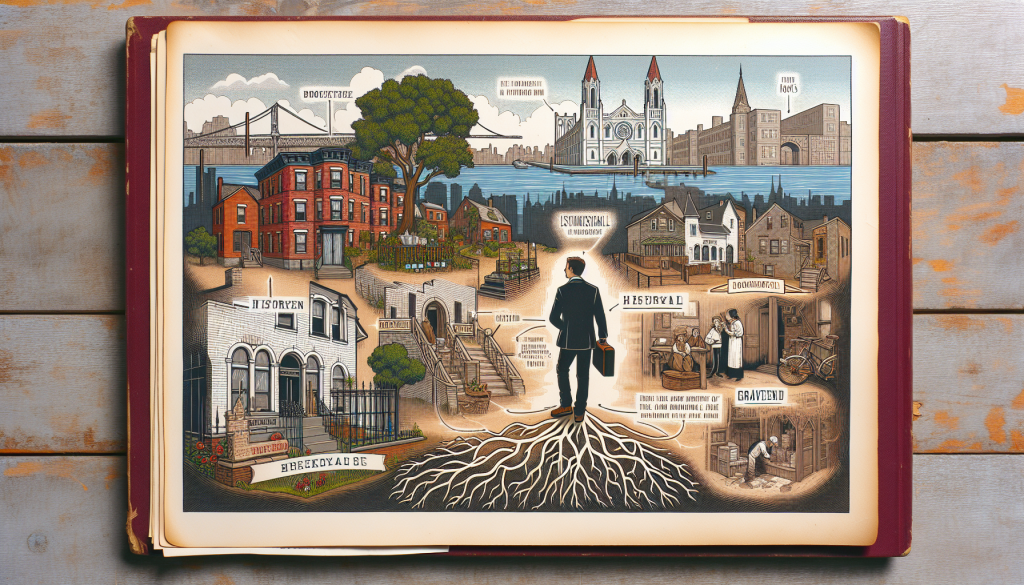
The bookmobiles followed carefully planned routes, stopping at key community spots to maximize impact. Mornings were often reserved for schools, where eager kids would line up for their weekly dose of reading. Afternoons and evenings shifted to housing projects, shopping centers, or busy street corners, with each visit lasting a few hours at one to three locations per day. Routes wound through neighborhoods like Canarsie (spelled “March” in early records), Breukelen, Kingsboro, Gravesend, Coney Island, Homecrest, Sea View, Marlboro, Beach Haven, and Bay View.
For instance, every Tuesday from 10:00 to 11:50 a.m. in the 1950s, the bookmobile parked at P.S. 188 in Gravesend Houses, delighting kindergartners who clambered aboard to borrow books.
But the bookmobile was more than a lending service—it became a vibrant pop-up community center. Families gathered around, chatting about plots and characters during noonday rushes. Librarians hosted curbside story hours at spots like Avenue U and East 14th Street, drawing crowds of wide-eyed listeners. One driver recalled the chaos fondly: “Driving a cab was never like this!” as he managed throngs of excited patrons. Even horses were welcome, tying up nearby while their owners browsed. In places like Glenwood, the bookmobile outshone local treats like pretzels, carousels, and ice cream, becoming a beloved fixture that fostered a love of reading amid the everyday hustle.
As the 1960s dawned, the service evolved to meet changing needs. Brooklyn’s neighborhoods were shifting, with urban renewal, civil rights movements, and economic challenges reshaping the borough. In 1967, the library partially outsourced operations to the Bookmobile Service Trust, which deployed three bright canary-yellow bookmobiles to underserved areas like Bedford-Stuyvesant, Brownsville, and East New York. These vehicles aimed to build trust and encourage library use in tense times, focusing on deprived communities where access to education was crucial.
The contract lasted until 1971, when city funding dried up, and the library took back control, supplementing with smaller blue-and-white Sidewalk Service vans for more targeted outreach.
Through it all, the Brooklyn bookmobiles symbolized ingenuity and inclusion, bridging gaps in a growing city. They didn’t just deliver books; they delivered dreams, sparking lifelong passions for learning in countless Brooklynites. Though the era of these rolling libraries faded by the late 1970s, their legacy endures—a testament to how a simple truck could ignite a community’s intellectual fire.
If you like this podcast, Check out our new Brooklyn Echo’s Audio podcast at The Brooklyn Hall of Fame were we have been recording episodes to stream at your favorite streaming services like Apple or Spotify.

Related Posts

Stay Informed With the Latest & Most Important News
Previous Post
Next Post
Previous Post
Next Post




Advertisement

-
 01The multifaceted career of Danny Winchell in the entertainment industry
 -
 02A Deep Dive into the Life and Legacy of Stuart L. Sternberg
 -
 03Neil Sedaka’s Timeless Legacy Endures
 -
 04John franco the history of his brooklyn and gravesend roots
 -
 05The History of Aida Turturro, Actress Born in Brooklyn,NY
 -
 06New BrooklynEchoes.com Trivia Page
 -
 07The Early Career of James Van Patten and His Rise to Fame